
Non-Ferrous Castings Manufacturers & Suppliers
Precision Non-Ferrous Castings for Industrial Applications

We are a leading manufacturer and supplier of high-quality Non-Ferrous Castings, delivering precision-engineered components for diverse industrial sectors worldwide. With extensive expertise in foundry engineering, metallurgy, and custom casting solutions, we produce durable and dimensionally accurate castings that meet stringent industrial standards and customer specifications.
Our Non-Ferrous Castings capabilities cover a wide range of alloys including bronze, brass, aluminum, copper, and other specialized non-ferrous metals. By utilizing advanced casting processes, rigorous quality control, and modern manufacturing techniques, we ensure superior performance, excellent corrosion resistance, and long service life for every casting component.
At Crown Engineers, we pride ourselves on being able to offer a multitude of casting types to serve your casting needs.
What Are Non-Ferrous Castings?
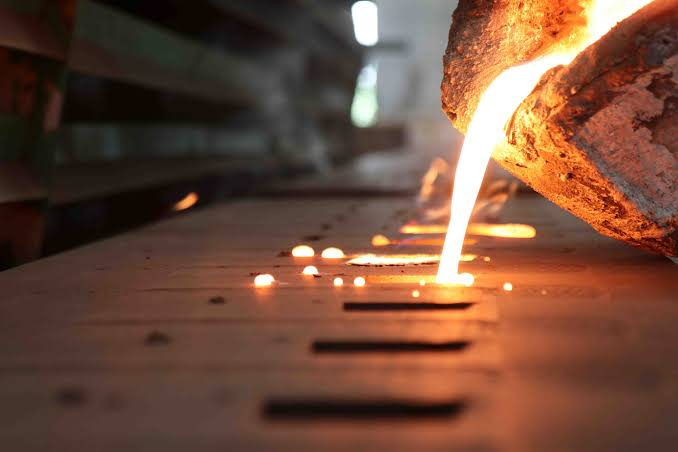
Non-ferrous castings are metal cast components manufactured from alloys that contain little or no iron. These castings are widely preferred for applications requiring corrosion resistance, lightweight construction, high thermal conductivity, electrical conductivity, and excellent machinability.
Unlike ferrous materials, non-ferrous alloys do not rust easily, making them ideal for demanding environments such as marine, chemical processing, power generation, automotive, aerospace, and engineering industries.
Common non-ferrous casting metals include:
- Bronze Castings
- Brass Castings
- Aluminum Castings
- Copper Alloy Castings
- Gunmetal Castings
- Phosphor Bronze Castings
- Leaded Bronze Castings
- Tin Bronze Castings
- Silicon Bronze Castings
Our Non-Ferrous Casting Capabilities
We manufacture custom non-ferrous castings in various sizes, complexities, and production volumes to meet industry-specific requirements.
Sand Casting
Sand casting is ideal for producing medium to large non-ferrous castings with complex geometries. This process offers flexibility in design while maintaining cost-effectiveness for customized production runs.
Centrifugal Casting
Centrifugal casting is widely used for manufacturing cylindrical components such as bushes, sleeves, liners, rings, and bearing components. The process delivers dense, defect-free castings with enhanced mechanical properties.
Gravity Die Casting
Gravity die casting provides excellent dimensional accuracy and improved surface finish, making it suitable for high-volume production of precision non-ferrous components.
Continuous Casting
Continuous casting produces uniform and high-integrity cast bars, tubes, and profiles with superior metallurgical consistency and reduced material wastage.
Custom Alloy Casting
Our metallurgical expertise enables us to manufacture custom alloy castings according to customer specifications, international standards, and unique operating requirements.
Non-Ferrous Alloys We Castings
Bronze Castings
Bronze offers exceptional wear resistance, anti-friction properties, and corrosion resistance. It is commonly used for bearings, bushes, gears, marine components, and industrial machinery parts.
Brass Castings
Brass castings provide excellent machinability, strength, and resistance to corrosion. These components are widely used in valves, plumbing fittings, electrical applications, and decorative engineering products.
Aluminum Castings
Aluminum castings combine lightweight characteristics with high strength and thermal conductivity. They are extensively utilized in automotive, aerospace, electrical, and industrial equipment manufacturing.
Copper Alloy Castings
Copper alloy castings deliver outstanding electrical conductivity, thermal performance, and resistance to harsh environments, making them suitable for specialized engineering applications.
Gunmetal Castings
Gunmetal is a copper-tin-zinc alloy known for excellent pressure-tightness and corrosion resistance. It is widely used in pumps, valves, marine equipment, and hydraulic systems.
Key Features of Our Non-Ferrous Castings
- High dimensional accuracy
- Superior metallurgical integrity
- Excellent corrosion resistance
- Enhanced wear resistance
- High mechanical strength
- Excellent machinability
- Consistent material quality
- Custom alloy development capability
- Long operational life
- Precision manufacturing standards
Applications of Non-Ferrous Castings
Our precision non-ferrous castings are widely used across numerous industries:
Automotive Industry
- Engine components
- Transmission parts
- Bearing housings
- Pump bodies
Industrial Machinery
- Bushings and bearings
- Gears and sleeves
- Wear plates
- Machine components
Marine Industry
- Propeller components
- Marine bearings
- Pump casings
- Corrosion-resistant fittings
Power Generation
- Turbine components
- Generator parts
- Electrical connectors
- Heat-resistant castings
Oil & Gas Industry
- Valve bodies
- Pump components
- Sealing elements
- Heavy-duty industrial parts
Aerospace Sector
- Lightweight structural components
- Precision-engineered alloy castings
- Specialized performance parts
Quality Assurance and Manufacturing Standards
Quality remains at the core of our manufacturing operations. Every non-ferrous casting undergoes stringent inspection and testing procedures to ensure compliance with customer requirements and international quality standards.
Our quality control processes include:
- Chemical composition analysis
- Spectrometric testing
- Mechanical property testing
- Dimensional inspection
- Hardness testing
- Visual examination
- Non-destructive testing (NDT)
- Material traceability verification
By maintaining strict process control throughout production, we consistently deliver castings with reliable performance and exceptional durability.
Advantages of Choosing Our Non-Ferrous Castings
Advanced Metallurgical Expertise
Our experienced engineers select the most suitable alloy composition and casting process based on application requirements.
Customized Manufacturing Solutions
We manufacture castings according to drawings, samples, specifications, and performance criteria provided by customers.
Superior Surface Finish
Modern molding and casting techniques enable us to achieve excellent surface quality and dimensional consistency.
Cost-Effective Production
Optimized manufacturing processes help reduce material waste while ensuring competitive pricing.
Global Supply Capability
We serve customers across domestic and international markets with reliable production schedules and timely delivery.
Why Choose Us?
As a trusted non-ferrous casting manufacturers, we combine technical expertise, advanced foundry practices, and customer-focused engineering support to deliver casting solutions that meet demanding industrial applications.
Our strengths include:
- Extensive foundry experience
- Custom casting development
- Precision machining support
- Multiple alloy options
- Consistent quality assurance
- Competitive pricing
- Timely delivery commitments
- Industry-specific engineering solutions
Whether you require prototype development, low-volume production, or large-scale manufacturing, we provide high-performance non-ferrous castings designed for reliability, efficiency, and long-term service.
Crown Engineers meets the demands when it comes to specific metals for specific parts.
FREQUENTLY ASKED QUESTIONS
Q1. What are non-ferrous castings and how are they different from ferrous castings?
Non-ferrous castings are components manufactured from metals and alloys that contain little or no iron, such as bronze, brass, aluminum, copper, and gunmetal. Unlike ferrous castings, they offer superior corrosion resistance, better thermal and electrical conductivity, lighter weight, and excellent machinability, making them ideal for marine, automotive, electrical, and industrial applications.
Q2. Which industries commonly use non-ferrous castings?
Non-ferrous castings are widely used across multiple industries, including automotive, aerospace, marine, power generation, oil and gas, electrical equipment, heavy engineering, agricultural machinery, and industrial manufacturing. Their durability, wear resistance, and corrosion-resistant properties make them suitable for demanding operating environments.
Q3. What types of non-ferrous alloys can be used for custom casting projects?
Custom non-ferrous casting projects can utilize a variety of alloys, including bronze, phosphor bronze, leaded bronze, tin bronze, brass, aluminum, copper alloys, and gunmetal. The selection depends on factors such as load requirements, operating temperatures, corrosion exposure, wear conditions, and desired mechanical properties.
Q4. Which casting process is best for manufacturing non-ferrous components?
The ideal casting process depends on the component design, production volume, and application requirements. Sand casting is suitable for complex and large parts, centrifugal casting is preferred for bushes and sleeves, gravity die casting offers high dimensional accuracy, and continuous casting is ideal for producing bars, tubes, and profiles with consistent material properties.
Q5. What factors should be considered when choosing a non-ferrous casting manufacturer?
When selecting a non-ferrous casting manufacturer, consider their foundry experience, alloy expertise, quality control systems, machining capabilities, testing facilities, customization options, compliance with industry standards, production capacity, and ability to provide technical support. A reliable manufacturer should also offer material certification, dimensional accuracy, and consistent product quality.
